
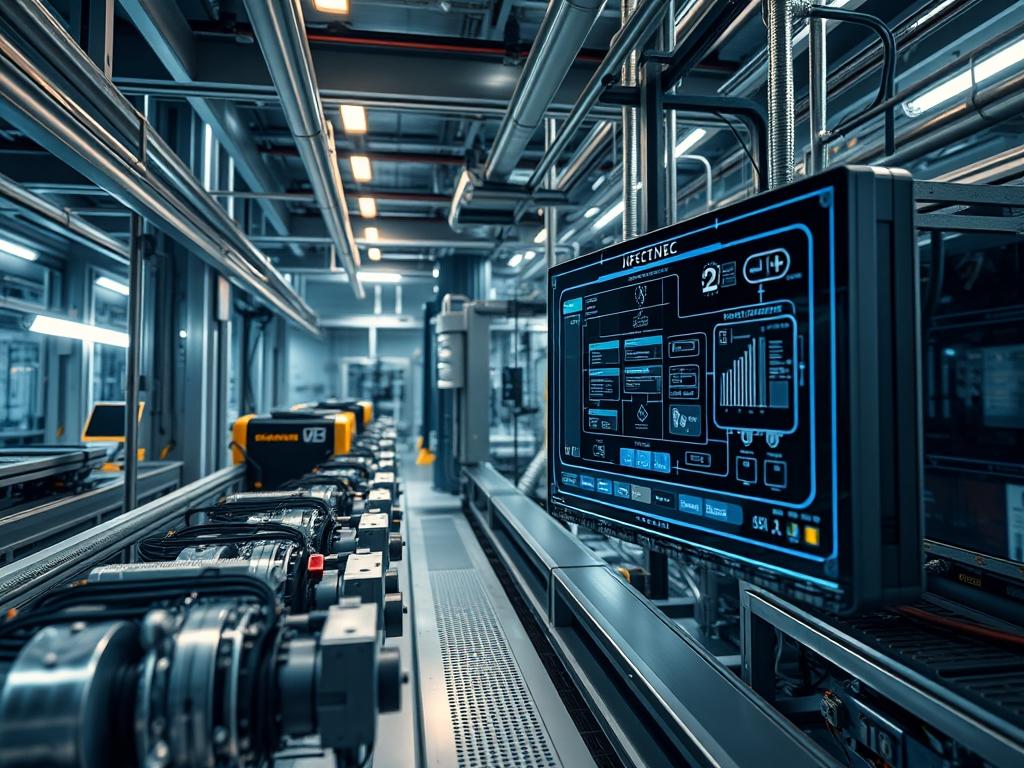
Bi-directional charging technology represents a paradigm shift in energy infrastructure; it transforms electric vehicles from static loads into active grid assets. This evolution places unprecedented mechanical and electrical stress on the physical interface. Bi-Directional Connector Durability is the primary metric determining the lifecycle of Vehicle-to-Grid (V2G) and Vehicle-to-Home (V2H) systems. Unlike traditional unidirectional charging, which typically involves one power cycle per session, bi-directional systems oscillate between charging and discharging states to stabilize grid frequency or manage peak shaving. This increases the duty cycle of internal contactors and thermal management systems by orders of magnitude. The problem lies in the accelerated degradation of contact pins and housing materials due to persistent thermal-inertia and the mechanical fatigue of repeated insertion-extraction cycles. This manual outlines the engineering requirements for maintaining high-throughput energy transfer while mitigating signal-attenuation and physical wear within the connector assembly.
Technical Specifications
| Requirement | Default Port / Operating Range | Protocol / Standard | Impact Level (1-10) | Recommended Material / Grade |
| :— | :— | :— | :— | :— |
| Mechanical Cycle Life | 10,000+ Insertions | IEC 62196-3 | 9 | Silver-plated Copper Alloy |
| Data Integrity | 12V / 5V PWM Pilot | ISO 15118-20 | 8 | Shielded Twisted Pair (STP) |
| Thermal Management | -40C to +85C | IEC 61851-23 | 10 | Thermally Conductive PA66 |
| Logic Voltage | 12VDC / 24VDC | DIN 70121 | 6 | 32-bit ARM Cortex-M4 |
| Ingress Protection | IP55 (Mated) / IP24 (Unmated) | IEC 60529 | 7 | EPDM Rubber Seals |
The Configuration Protocol
Environment Prerequisites:
Ensure all systems comply with NFPA 70 (National Electrical Code) and ISO 15118-20 for bi-directional communication. The technician must possess a Level 2 Electrical Certification and access to the evse-admin group on the local control gateway. Software dependencies include the v2g-lib-plclib version 2.4.0 or higher and an active OpenVPN tunnel for remote telemetry monitoring. Hardware must be grounded via a dedicated PE (Protective Earth) line with a resistance of less than 10 Ohms to prevent common-mode noise from affecting the Signal-to-Noise ratio on the Control Pilot (CP) line.
Section A: Implementation Logic:
The engineering design prioritizes the minimization of thermal-inertia within the connector housing. During discharge cycles (Vehicle-to-Grid), the power flow originates from the DC battery and passes through the on-board inverter or an external DC-to-AC converter. This reverse flow generates heat at the contact interface due to resistive losses. By utilizing silver-plated pins with high conductivity, we reduce the power overhead and prevent the “hot-swap” degradation that occurs when current is interrupted during high-load periods. The logic relies on idempotent state transitions; regardless of how many times a start command is sent, the system ensures the mechanical lock is engaged before the high-voltage contactors close, preventing arcing and maintaining connector longevity.
Step-By-Step Execution
1. Physical Interface Inspection
Perform a microscopic inspection of the Power Pins (L1, L2, L3, N) and Data Pins (CP, PP) to identify oxidation or surface pitting. Use a fluke-multimeter to verify that contact resistance is below 0.5 milli-Ohms.
System Note: This action ensures that the physical layer of the OSI model for charging is stable. High resistance leads to localized heating, which degrades the structural integrity of the Polyamide (PA66) housing.
2. Control Pilot (CP) Calibration
Initialize the evse-control-daemon and monitor the PWM (Pulse Width Modulation) signal on the CP line. Use an oscilloscope to verify a clean 1kHz square wave with a +/- 12V amplitude. Adjust the R_ev resistor values to simulate different vehicle states.
System Note: Correct signal amplitude is vital for the ISO 15118 handshake. Excessive noise or signal-attenuation on this line will trigger an immediate emergency stop, causing mechanical stress on the locking solenoid.
3. Thermal Sensor Array Verification
Access the local controller via SSH: ssh admin@192.168.10.50. Execute the command sensors | grep ‘connector_temp’ to read the real-time values from the embedded NTC Thermistors. Calibrate the trip point to 85C.
System Note: The thermal sensor data is part of the safety-critical feedback loop. High thermal-inertia in the pins means the cooling system must be preemptively activated via the sysfs interface before the critical threshold is reached.
4. Mechanical Lock Engagement Testing
Execute the command gpio-cli set-output 18 high to engage the electromagnetic locking pin. Manually attempt to withdraw the connector to ensure a pull-out force resistance of at least 200 Newtons.
System Note: The lock prevents accidental disconnection under load. An idempotent locking logic ensures the software cannot initiate bi-directional power flow unless the LOCK_STATUS sensor returns a high bit to the kernel.
5. Bi-Directional Load Sequencing
Initiate a low-power discharge cycle using v2g-tool –mode V2X –power 5kW. Monitor the CAN-bus traffic for payload errors and verify that the concurrency of the power modules matches the requested grid demand.
System Note: Fast switching between charge and discharge modes tests the latency of the communication stack. High latency can cause reactive power issues that stress the magnetic components within the connector.
Section B: Dependency Fault-Lines:
The most common mechanical bottleneck is the degradation of the EPDM seals, which leads to moisture ingress. This ingress facilitates galvanic corrosion on the silver plating of the contact pins. On the software side, library conflicts between the Open-V2G stack and the local PLC (Power Line Communication) driver frequently cause packet-loss during the TLS handshake. If the Modbus mapping for the inverter is misaligned, the system may attempt to pull current without the connector being fully seated, leading to destructive arcing.
The Troubleshooting Matrix
Section C: Logs & Debugging:
Log files for the bi-directional interface are located at /var/log/energy-mgmt/connector-durability.log. Critical errors regarding the physical layer are often identified by the hex code 0xDEADC0DE, which indicates a communication timeout between the EV and the EVSE.
| Error Code | Potential Cause | Verification Step |
| :— | :— | :— |
| ERR_THERM_OVERLOAD | High contact resistance | Measure pin voltage drop under 32A load. |
| ERR_CP_SIGNAL_LOSS | Cable shielding failure | Check STP continuity and ground loops. |
| ERR_LOCK_FAIL | Solenoid debris | Inspect Locking Pin for physical obstructions. |
| ERR_ISO_HANDSHAKE | Protocol mismatch | Run tcpdump -i eth1 to capture V2G packets. |
| ERR_REV_FLOW_TRIP | Inverter synchronization | Verify grid frequency alignment via grid-monitor. |
For deeper analysis, use the dmesg command to identify kernel-level interrupts from the I2C temperature bus. If the log shows “bus arbitration lost,” inspect the wiring harnesses for electromagnetic interference (EMI) from the high-voltage DC cables.
Optimization & Hardening
Performance Tuning:
To maximize throughput, implement a pre-conditioning cooling cycle. When the NTC sensor detects a temperature rise exceeding 5C per minute, the system should trigger the secondary cooling loop or reduce the current by 10 percent to manage thermal-inertia. This proactive throttling extends the connector life by preventing the annealing of the copper contacts.
Security Hardening:
The bi-directional interface is a potential vector for grid-level cyber-attacks. Implement Firewall (iptables) rules to restrict traffic to the ISO 15118 port (TCP/8042) only. Ensure that all V2G payload data is encrypted using TLS 1.3 and that the private keys are stored in a hardware-based TPM (Trusted Platform Module). Set strict chmod 600 permissions on all configuration files in /etc/evse/ to prevent unauthorized modification of current limits.
Scaling Logic:
As infrastructure scales from a single unit to a fleet of 50+ bi-directional chargers, use a centralized Load Balancer (HAProxy) to manage the concurrency of discharge requests. This prevents localized heat islands in the charging hub. Implement a distributed logging system using Elasticsearch to track the degradation patterns across all units, enabling predictive maintenance based on historical cycle counts.
The Admin Desk
How do I reset a “Thermal Lockout” code?
Access the terminal and run evse-cli reset –thermal. This command is idempotent; it will only clear the fault if the temperature has dropped below 60C. Verify the current resistance across the pins before resuming the discharge cycle.
What is the recommended cleaning interval for pins?
Under high-load bi-directional usage, pins should be cleaned every 500 cycles. Use a non-residue contact cleaner and a lint-free swab. Avoid abrasive materials that could strip the silver plating and increase signal-attenuation.
The locking solenoid clicks but won’t engage.
This usually indicates a misalignment between the vehicle inlet and the connector. Check the EPDM gasket for deformation. Lubricate the locking pin with a dry silicone spray to reduce friction-related mechanical wear.
Why is there high packet-loss on the PLC line?
This is often caused by a lack of encapsulation in the wiring. Ensure that high-voltage cables are separated from the signal lines by at least 50mm or that the communication cable uses high-quality shielding connected to the chassis ground.
Can I bypass the thermal sensor for testing?
Never bypass safety sensors in a production environment. For bench testing, you may use a 10k Ohm resistor to simulate a nominal temperature (25C); however, this disables the safety logic and poses an immediate fire risk during high-current operations.